Writing Exercise, July 17, 2023
The madam’s office stood in stark contrast to the rest of the estate: while tastefully appointed, it reminded Adam of his father’s office, rather than anything to do with sex work. Madam Twilight in general reminded Adam of him, for reasons he couldn’t quite explain. It wasn’t her demeanor, which, while authoritative, was also not lacking in warmth. She was also neither the most fashionable of the women he’d seen over the last half an hour, nor the most deliberate in her sartorial choices. In short, if he hadn’t met her at the office, he would have believed her just another of the house’s residents.
“So, I understand we have you to thank for our Mary Jane’s safe return, doctor. Are you usually in the habit of strolling through the forest at night?”
“Sometimes,” he answered. No reason to give explanations he didn’t need to, yet. “Is she?” Against all logic, Mary Jane had acted as if were the most natural thing in the world for her to be at the grotto. Although he supposed it actually made more sense for her than for him, given that night brought as much—or as little—visibility as day did.
“Well, our Mary Jane has always been independent. Clients appreciate that about her. And, as you’ve no doubt concluded, her instincts sometimes border on the uncanny. It’s not the first time she has managed to leave like that.” She said this without bitterness, almost amused. “But I didn’t call you here to talk about her.”
Adam ignored the sudden knot in his throat. “I can leave if you want. I didn’t mean to intrude.”
“Oh, you’re adorable. No, please, stay for dinner. It’s the least we could do for you for your services. And the girls enjoy having someone around they don’t have to please. No, what I want to talk about is the fact that when she left last night, Mary Jane was, as she’d always been—what’s the technical term—vision impaired? This morning, she is not.”
“Well, the way she explained it, that was the whole reason she’d left was to find St. Agnes’ pool.”
Adam removed three years from his mental estimate of Madame Twilight’s age, as she theatrically rolled her eyes. “Let’s not act stupid. You and I both know the only miraculous thing about St. Agnes is that it’s still usable. It wasn’t the hot springs that healed Mary Jane. And so it must have been something else. After all, just because something isn’t magical doesn’t mean magic doesn’t exist.”
Writing exercise, July 14, 2023
The first disappearance of a Supreme Court Justice judge did not terrify people. It unsettled them, to be sure—how does one of the most protected people in the country just vanish? But it wasn’t the sort of thing anyone could apply to their lives—so she’d disappeared; what does that mean for me, personally?
Which isn’t to say that change didn’t happen. As the fifth vote in a conservative court, Joy Garrett had been essential part of Republicans’ efforts to roll back the last century’s worth of progress. Now, the (barely) Democratic Senate, along with the Democratic White House, had a chance to turn things around—at least if Garrett were to ever be declared dead. And so, many people, including Jackie Joyce, just shrugged and tried to keep their schadenfreude in check. Sure, it was weird as hell, what had happened, but wasn’t the world a better place now?
One month later, just as people seemed in the verge of forgetting, the second judge disappeared.
After the disappearance of Rufus Wainwright, a fixture of the Supreme Court for over twenty years, all hell broke loose. There wasn’t a pattern quite yet, but the extremely low bar for speculation had been cleared, and so a million new theories arose, many of them centering on the fact that, like Garrett, Justice Wainwright had been a staunch—Jackie Joyce would say radical—conservative. If this was a recurring act of God, it was starting to seem as if it had an agenda.
And so impulsive action was taken. Security measures were beefed up, and investigations begun, for all the good they did. Gun sales jumped, and this time Jackie Joyce had to admit to her girlfriend that she couldn’t blame people for it; if people could just disappear like that, then paranoia seemed, if not quite logical, understandable. They were also starting to see more people at church, although their pastor indicated that she did not expect this to last. It was what always happened, during a crisis, and these always eventually ended or were forgotten.
In the Senate and in the networks, Republicans, realizing they had no real leverage, began speaking of conciliation. Given the tragic disappearances of two justices—not deaths, they always emphasized—it would be impulsive and disrespectful and downright irresponsible to even think about rolling back recent decisions. The White House, with its customary fecklessness, seemed to be suggesting the same thing, although according to some sources, steps were being taken in the background to move forward with nominations, and not altogether terrible ones.
One day before Justice Garrett was set to be declared dead, three senators—two republicans; one, a democrat in name only—went missing.
A List of Things Likely to Make Up a Good Day

- Being able to cook breakfast
- Being acknowledged by a dog or cat–preferably both
- The consumption and purchase of good cheese
- Buying a new comic book
- Having just enough work to feel productive, while not enough to bring exhaustion
- Getting just the right opportunity to use the phrase «your mouth is a fountain of LIES!», i.e., when you have been misinformed about something utterly unserious and harmless.
- The opportunity to take a walk that is neither too long nor too short, in pleasant weather, while listening to your favorite music
- Doing a thing you’ve been neglecting, such as sweeping your room
- Talking to a friend or two
Today was a good day.
Untitled Thing, January 21,2021
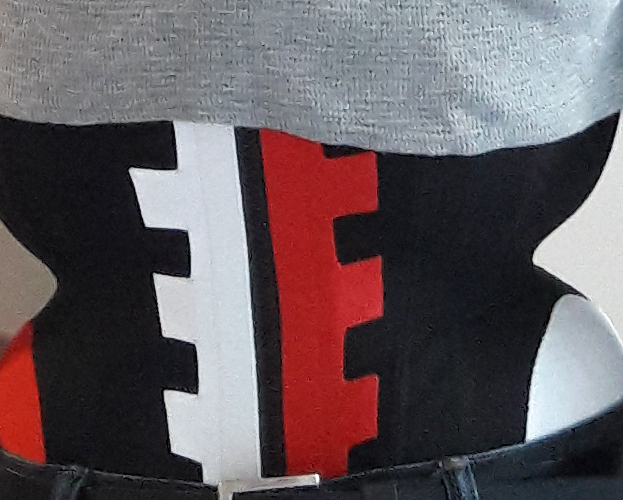
As my corset pressed tighter against my midsection, I felt increasingly more comfortable and ready for the time to come. Without it, my existence felt precarious and uncontrollable, like the wind; with it, I felt solid. My energies could be marshaled in whatever direction became necessary instead of uselessly and chaotically dispersing every which way. And it didn’t hurt that I loved the way it made me look. I would never be willowy like my older sisters, but then I didn’t need to be.
“A little tighter,” I instructed my maid, Aria. Presently, I needed as much help as I could get. Like the rest of my family—at least those who still lived at home or in the city—I was expected to be in attendance at tonight’s party, which meant many opportunities for me to inadvertently embarrass my parents and siblings. Once upon a time, that would have happened with some regularity—my father’s work and position meant there were many parties, many dinners, and many social events.
I’m not good at talking to others. I take things too literally and am bad at identifying the deeper meanings behind words. I go on and on about whatever subjects interest me, hardly ever letting others get a word in edgewise, which I’m told many dislike. I’ll often say whatever comes to mind, without really understanding how it might be insulting or offensive. In order to prevent those things, I eventually found it safer to say nothing at all.
And then I began tightlacing. Buoyed by my stays, I had the presence of mind to remember to follow all the rules of proper social discourse. It didn’t make parties easier—they are, in fact, exhausting—but at least I am no longer as likely to regret them afterwards. Sometimes, under the right circumstances, they can even be enjoyable.
“Thank you, that’s enough,” I said, and Aria, with her usual dexterity and speed, tied the excess lace into a bow. The pressure around my waist, the sensation of my lungs expanding and contracting against the whalebone and cotton, my unalterable posture, all felt more constant and reassuring than any hug. Any tighter, however, and the corset would be just as distracting as if I weren’t wearing it at all. It would still be a while before I was fully prepared, but the most important part, at least, was over.
Review: «Legion of Super-Heroes» (Vol. 4) #1
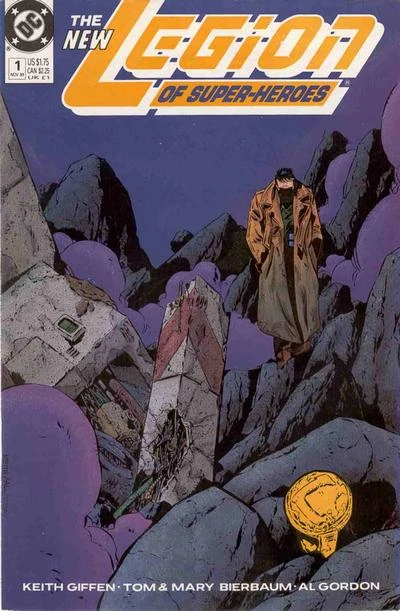 Publisher: DC Comics
Cover Date: November 1989
Writers: Keith Giffen, Tom Bierbaum, Mary Bierbaum, Al Gordon
Pencils: Keith Giffen
Inks: Al Gordon
Colors: Tom McCraw
My first taste of what became known by the Legion fandom as the TMK run—so called because of its chief writers, Tom Bierbaum, Mary Bierbaum, and Keith Giffen—came somewhat accidentally. I’d been reading and enjoying the reboot Legion as a teenager and, not knowing anything about the franchise’s history, reached the very logical conclusion that its story began with issue #1 of the title they’d called home. Fortunately for me, my father, an avid DC comics collector, still had that issue within easy reach, so I pulled the issue in question out and immediately realized I had no idea what was going on.
As I would eventually learn, I was not the only one to feel that way. The first issue of Legion of Super-Heroes‘ fourth volume is both dense and unfamiliar. As the first bit of text notes, it is five years later, and things have changed quite a bit, not only in the world the Legion inhabits, but also in the very way their story is told. There are no action set pieces or super-heroics. There is arguably no real plot—at least not any with a beginning, middle, or ending. Most importantly, there is no Legion.
2019 in Review
So, speaking in terms of the world at large, 2019 was not great, with many many catastrophes great (global warming, the authoritarian terrorists currently in power) and small (Jesus, what a disappointment Star Wars was).
And yet, speaking on a personal level, I have to say, 2019 may have been my best year in memory, in large part because it’s the first year in a good long while where I feel that I’ve made steady progress in living the life I want to live. Among the things that happened:
- I obtained my master’s degree in translation
- I moved out into my own apartment
- I’ve found steady, fulfilling work, and begun making inroads into making money as an interpreter
The One with Two Amy Ackers (but One Sarah Shahi)
So I’ve been wanting to do something like this for years. I like working on fanvids, but it’s also one of those things I don’t get to do a lot, and not at all since my last video, several years and one computer ago.
Thanks to a confluence of events–the purchase of an external DVD drive, which replaced my busted internal one; the unexpected opportunity to install a video editor, which came with the aforementioned drive (alas, it’s only a temporary trial version); and some fortuitous timing when it came to the obtaining footage–I finally managed it, and I couldn’t be happier with it.
What’s it about? Well, Alias, Nikita, and Person of Interest, of course.
Of Course It’s Complex

Okay, so this may just be my favorite pic of myself to date—top three, at least. Good lighting, a solid angle, my hands aren’t just hanging around awkwardly with nothing to do…and of course, it features a fantastic view of my squeezed-the-fuck-out-of waist, courtesy of Puerto Rican designer Innova Corsetry.
(Yes, I can breathe. No, I’m not causing permanent harm to myself.) Lee el resto de esta entrada »
On Irina Derevko

(Note: Spoilers for Metal Gear Solid 3: Snake Eater and The Americans ahead. And for Alias, obviously.)
I’ve never understood why Irina Derevko is so beloved.
No, scratch that. I do understand why she’s beloved. What I don’t understand is the belief that the character on-screen actually had anything but the most superficial likeness to the character than exists in the better-than-the-actual-show fandom headcanons. Like, season 2 is overwhelmingly considered the best season of the series, and Irina is often credited as one of the main reasons, and…I can’t see it? [*1]
Similarly, I don’t understand the hate for Irina’s final story. Yes, the missiles and mass murder specifically were stupid, and the final fight with Sydney is seriously lacking in “oomph”, but these are execution problems, and most of the complaints appear to be about the concept—as in, fans believe Irina wouldn’t put her ambitions above Sydney, especially after season 4. To which I say…really?
«Reverie» Has Many Dreams, but No Ambition
From the very start, Reverie was primed to catch my attention. Between starring Sarah Shahi and being super-reminiscent of my videogaming sacred cow Dreamfall, there was no way I wasn’t going to be interested in the series about lucid controllable dreams, the people who become addicted to them and consequently slip into comas, and the hostage negotiator who attempts to save them. That it looked gorgeous only helped, as does the fact that its primary cast is overwhelmingly composed of people of color.
That said, the more time passed between that first trailer and the show’s actual airing—about a year—the more apprehensive I became. While that trailer did a good job of selling the show’s concept, it made far less of an effort to sell the characters—never a great sign. Furthermore, there was no guarantee that the series’ potential could be met: for every Person of Interest, a series that smartly analyzes the implications of its premise, there’s a Designated Survivor, which despite being about the people tasked with rebuilding the U.S. government, still somehow finds little to say. And sadly, the first episode of Reverie seemed to resemble the latter more than the former, spending too much time on mechanics, and too little time on their implications, or making a case for why the audience should care. The second episode, although a considerable improvement, largely followed suit. And that’s a shame: if I’m never going to get a Dreamfall series—and that’s never going to happen, even though Chloe Bennet and Melanie Scrofano are right there to play Zoë and Saga, respectively—then I’d love to see this become the next best thing.

I’m adding pics from Dreamfall because I already have them, and they describe the series just as well as anything from the actual show.
 Chasing Sheep